

Castle of Ghosts
A love story set in the winding paths of a haunted castle by the sea.
Amidst a series of encounters and partings, Princess Rita and Roberto try to overcome terrifying ghosts.
''All love letters...
are ridiculous!''
- About the Show
- The play Castle of Ghosts embraces traditional routines known in Portugal and Europe. But it also looks at and weaves together memories, challenging some conventions surrounding the tradition of puppet theatre: “Teatro Dom Roberto”, elevated to Portuguese intangible cultural heritage in 2021.
- Context
- There are various traditional forms of puppetry around the world. It is thought that the traditional European forms, although with different names and characteristics, originated from the Commedia dell'arte during the Renaissance. The Teatro Dom Roberto is to Portugal what Punch and Judy is to England, Guinhol is to France, and Polichinello is to Italy. This traditional genre operates within the realm of action, rhythm, suspense, movement, and the use of the "swazzle". Worldwide, there are fewer than 150 people keeping this genre of popular theatre alive, the reference to the traditional genre being understood as the use of the "swazzle" - an object that, when placed on the palate, amplifies the puppeteer's voice - and the rhythmic scenes of manipulation and "fighting". Since 2012, we have traveled nationally and internationally, promoting and preserving the Teatro Dom Roberto through performances, workshops on building and manipulating glove puppets for children, adults, teachers, assistants, and educators, as well as innovative proposals such as creating new narratives through stop-motion workshops with the characters from the stories, and the construction of "Robertões" in 2015, which resized the puppets, inviting the audience to a performance "dressing" the characters of the show. These initiatives reflect the company's concern in provoking new reflections among the public, mixing and deconstructing plots in a playful artistic line with what the company constantly proposes to do: to play between and with tradition and contemporaneity. We incrementally foster knowledge about a relic of our culture that is a living sample of times past, recorded by the elders and revealed to the younger generations as a kind of irresistible anachronistic fragment. In this sense, it is imperative to continue this journey, now 12 years later, with hundreds of shows and collections of workshops since its debut. Disseminating techniques and discovering new dramaturgical possibilities is essential, and above all, combining experience to create something "new," mixing various influences from different forms spread around the world with specific codes in manipulation techniques, but also in the interplay between the actress, puppets, and audience. Today, the Teatro Dom Roberto is a living relic of portuguese popular culture and part of the Portuguese intangible cultural heritage, essentially represented by puppeteers/roberteiros with a strong connection to puppet theatre. "The Barber" and "Portuguese Bullfight" are the best-known stories from the traditional repertoire. In the 1980s, João Paulo Seara Cardoso (JPSC), along with one of the last "roberteiros" of the 1920s/30s generation, the puppeteer António Dias, changed the dramaturgical plot, creating new manipulation "routines" in the play "The Barber," turning the one known today as Dom Roberto into a hero, as he is the one who "kills" the barber and not the other way around, as had happened previously. He also added the feat of Dom Roberto "killing" death itself, thus affirming himself as a hero and immortal. From JPSC, new generations of "Roberteiros" (Dom Roberto puppeteers) emerged, and after his death in 2010, Sara Henriques (still a resident actress at Teatro de Marionetas do Porto) learned and recovered his repertoire, becoming the first woman, a professional puppeteer, to perform the Teatro Dom Roberto with all the characteristics that grant it recognition in the Matriz (national archive) as intangible cultural heritage. It should be noted that the wood carving work for the puppet heads was also carried out in 2010 by Rui Rodrigues (resident visual artist of the JPSC company).
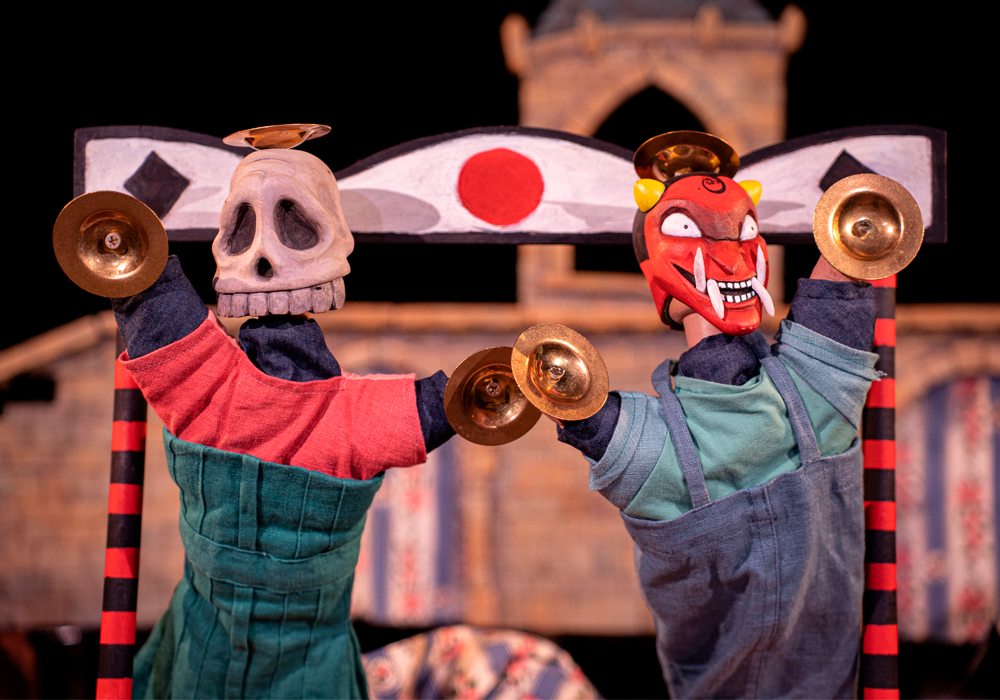
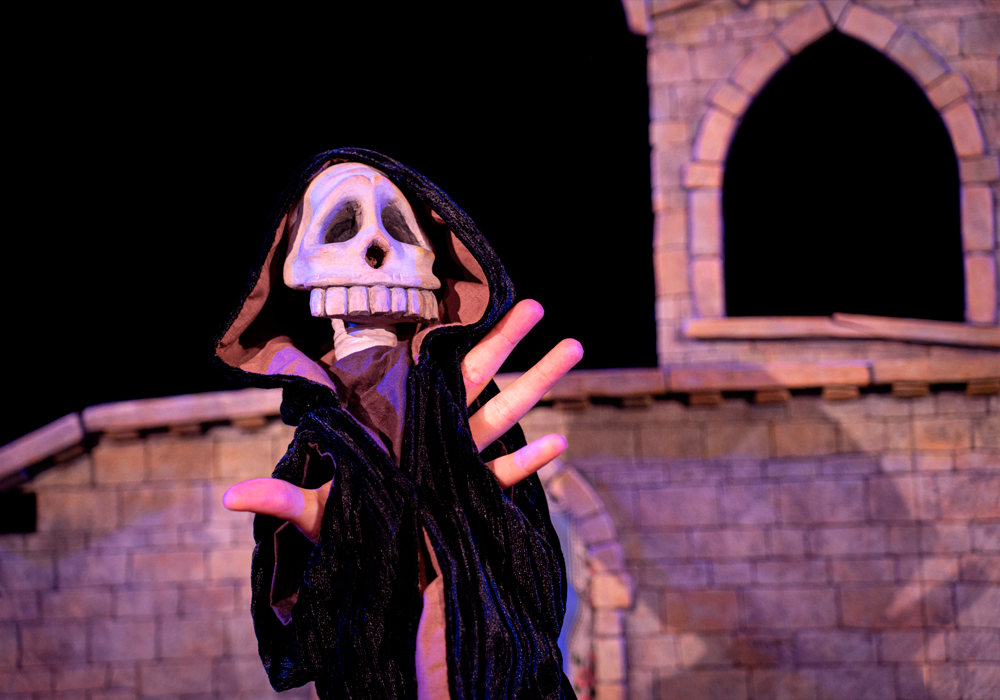
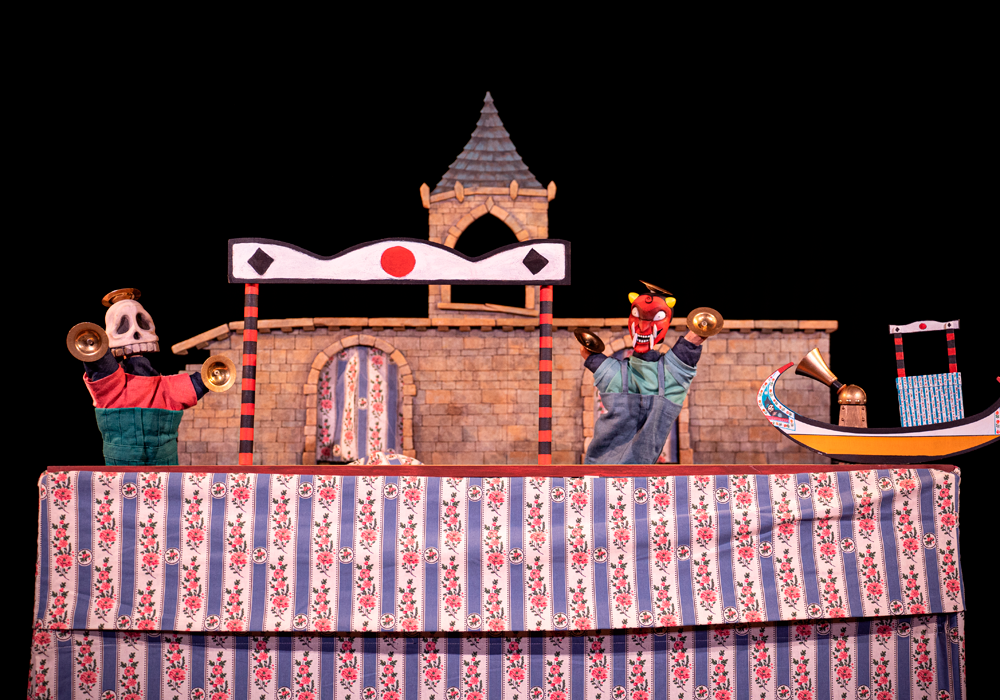
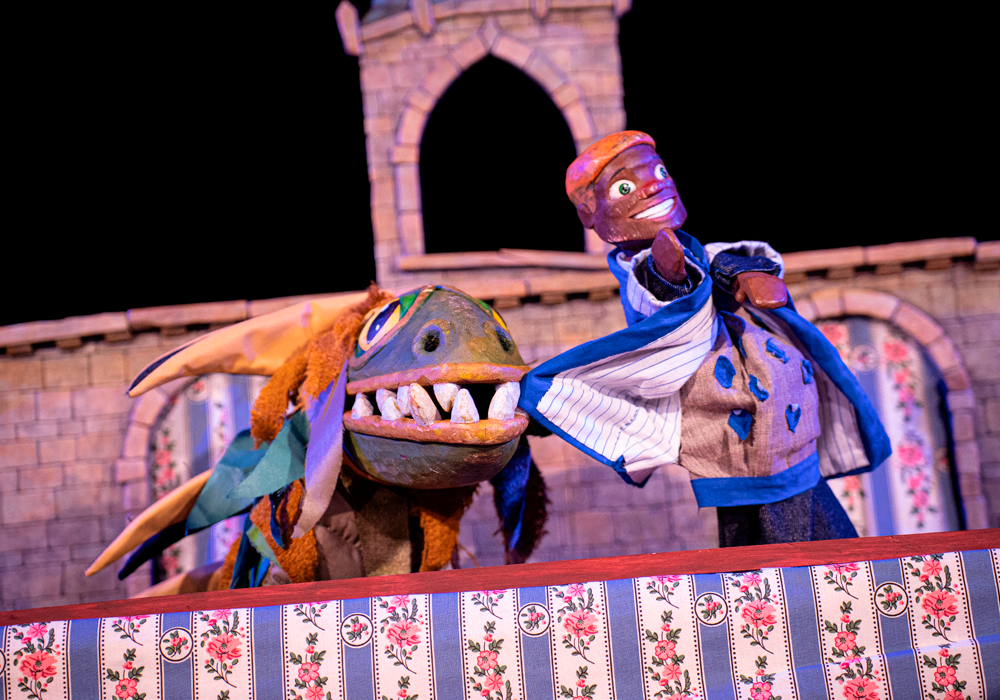
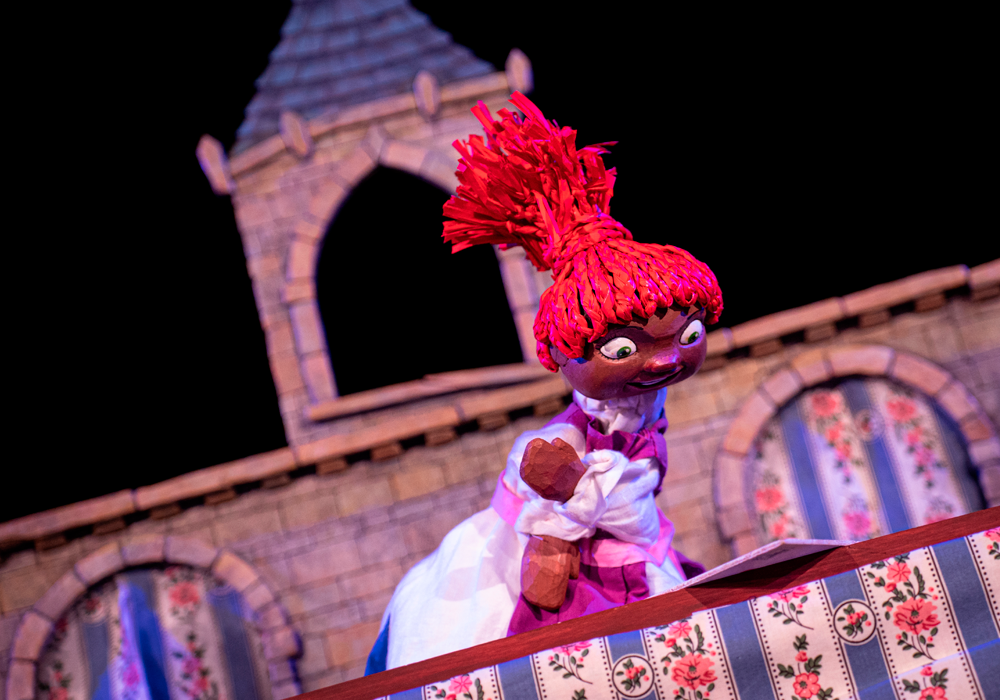
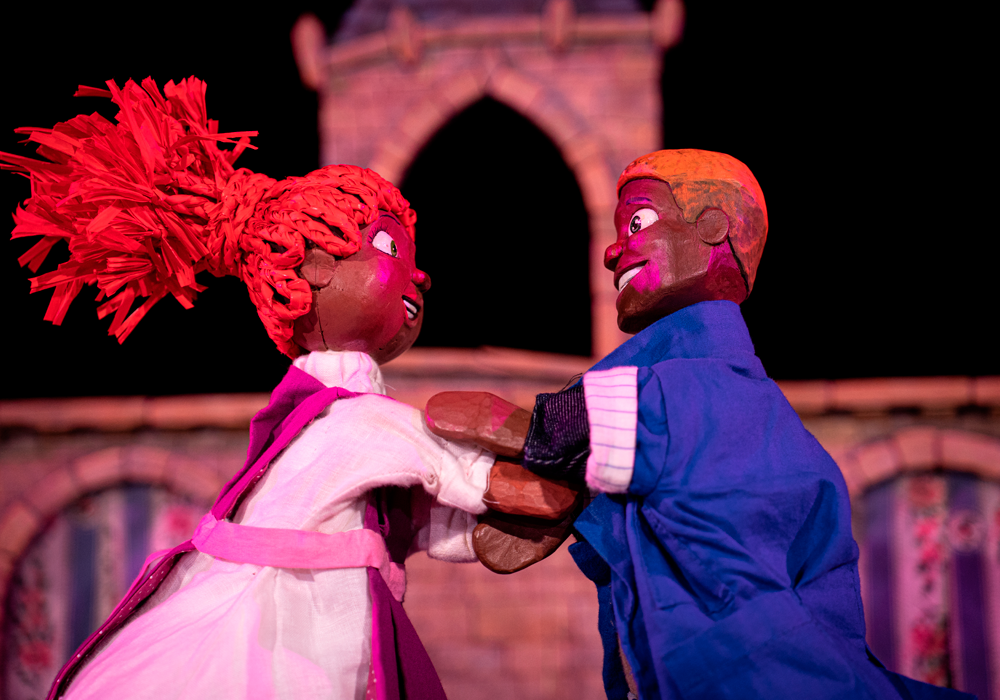
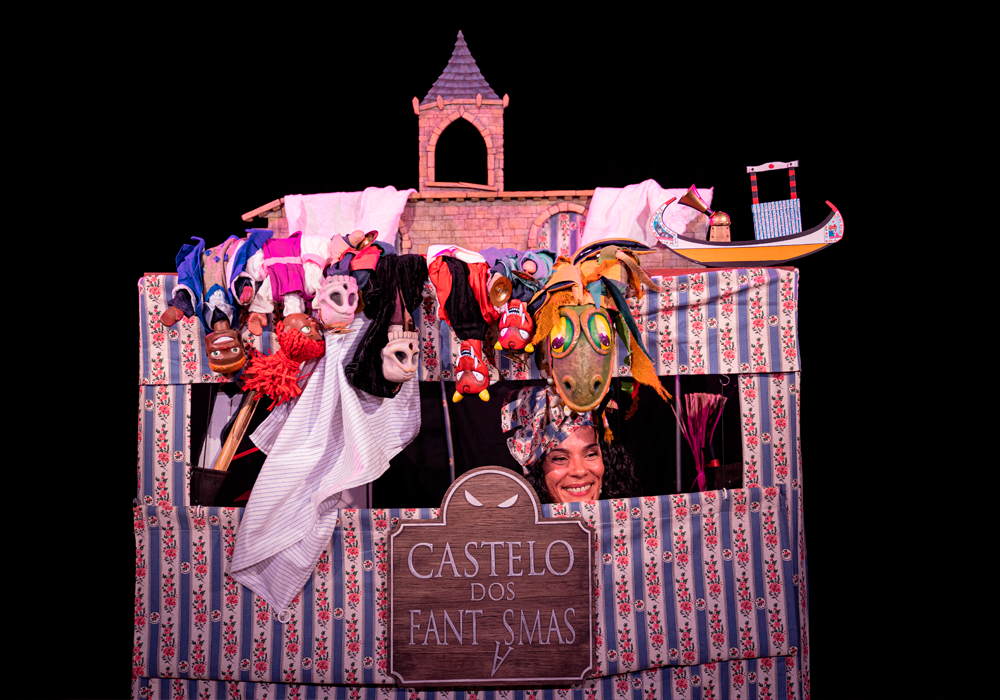
outdoor shows
Castle of Ghosts

- Credits
- Co-creation | Sara Henriques, Rui Rodrigues, Luís Zornoza Boy
- Investigative consulting | Luis Zornoza Boy
- Puppets and props | Rui Rodrigues
- Puppeteer | Sara Henriques
- Original music | António Justiça
- Text | Excerpts from the poem "All Love Letters Are," by Fernando Pessoa
- Costume Designer | Claudia Ribeiro
- Movement consulting | Paula Moreno
- Production | Ana Gavina and Sara Henriques
- Artistic direction | Sara Henriques and Rui Rodrigues
- Production | Red Cloud Teatro de Marionetas
- Co-producers | Festival dos Canais, Teatro Aveirense, Aveiro City Council and Lisbon Culture/Puppet Museum
- Support | Government of Portugal – Culture / Directorate-General for the Arts
- Technical rider
- Presentation area
Width - 4 meters
Depth - 3 meters
Height - 3.5 meters
- Lighting (indoor or at night)
- 2 ParLed projectors at a minimum height of 3.5m.
2 PC 1KW projectors at a minimum height of 3.5m. - 1 Laptop + Chamsys DMX interface (Company equipment)
- Sound
- Mixer (Company equipment)
Stereo sound system on tripods
1 Wireless headset microphone (Company equipment)
1 Laptop (Company equipment)
- Logistics
- Setup: Daytime 2 hours / Nighttime (with lighting) 4 hours
Dismantling - 1 hour - Team
2 people
1 dressing room
1 person allergic to gluten
- Duration
- 40 minutes
- Age rating
- M/3
- Location
- Outdoors, streets, squares, gardens, theaters, rooms, playgrounds